Possible Woman Interview with Naeemah Elias
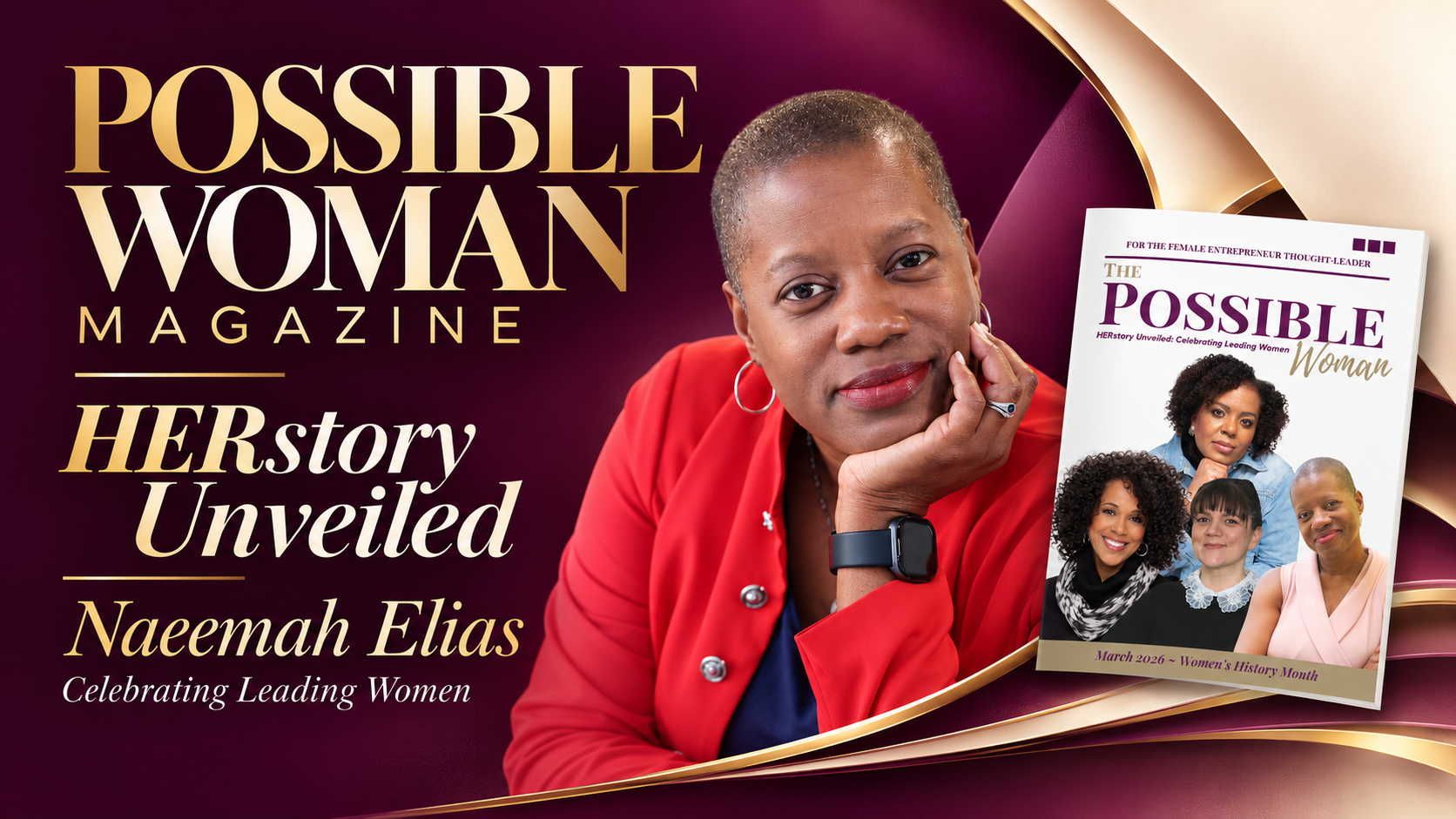
Naeemah Elias has a knack for turning outsider energy into unstoppable momentum. From growing up in south Chicago to performing on stages across the U.S. and London, and later navigating the corporate world as a single mom, she’s lived a life full of bold moves and reinvention. Today, she leads Elias Presence, helping professionals speak with confidence, step into rooms that matter, and turn challenges into opportunities. With her mix of performance, psychology, and real-world strategy, Naeemah inspires people to find their voice, embrace their story, and thrive as the main character in their own journey.
Naeemah, please share your story...
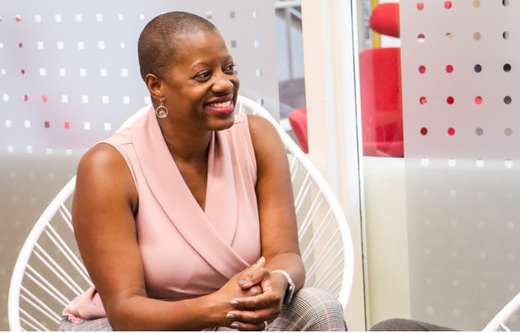
I love an adventure, a problem to solve, a giant step outside my comfort zone.
Looking back, my life has been a series of sharp turns and unexpected chapters.
I grew up in poverty south of Chicago with four brothers and one sister. I was an introvert who read constantly and studied the people around me. My focus on academics, theatre, and school activities eventually created my path to Harvard.
The shift from poverty to extreme wealth, and from public school to elite private education, was a mind blowing culture shock. I spent a lot of time watching people, studying their confidence, and trying to understand the unwritten rules of this new world. That instinct to observe people and decode systems still shapes everything I do today.
Before entrepreneurship, I lived several different lives. I was an award winning actress and puppeteer touring the US and London. I later took executive assistant roles in startups where I began building solutions, and then spent 13 years in corporate finance, rising from executive assistant to managing director. During those years, I was also a single mom raising three kids who grew up alongside my career, watching me build, pivot, and rebuild my life in real time.
The common thread?
Reinvention.
I would declare a plan that felt uncomfortable or like a stretch, and the declaration made me publicly accountable. There were moments when I wondered if the world would realize I was a fraud. But I kept going, usually focused on solving the problem in front of me and finding the next one to tackle.
Today I run Elias Presence, a leadership and communication business, and the work is deeply personal. I know what it feels like to walk into a room as the only one, the first one, or the outsider. I also know what becomes possible when someone claims their voice and becomes the main character in their own story.
Outside of work, I am a mom, a traveler, and a lifelong student of people. My recent AuDHD diagnosis helped me understand why I naturally build frameworks and systems to navigate the world. Those tools now shape how I teach leadership and communication, and explain why I spend so much time studying people and systems.
My kids are creating their own adventures around the world, studying and exploring in places like the UK, Tokyo, and beyond. Watching them step into their confidence is one of the greatest joys of my life.
We become who we are through our choices, our challenges, and our adventures.
When we embrace those stories instead of hiding them, they become the very thing that makes our presence powerful.
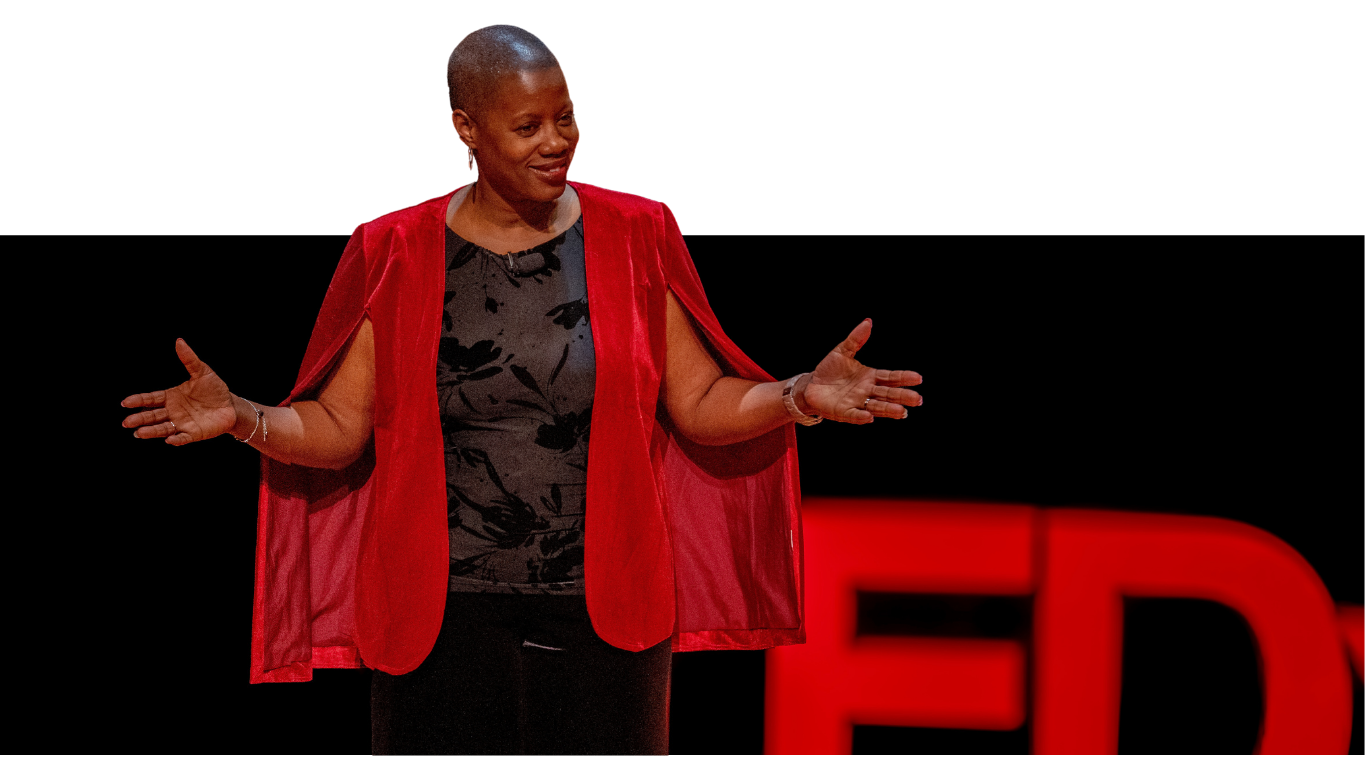
What was the turning point that inspired you to pursue your current path?
The turning point came on Halloween night.
I was sitting at home in full costume and makeup, handing out candy to neighborhood kids, when I grabbed a piece of paper and pencil to answer a question.
Earlier that month, a leader challenged me to write my own job. He asked how I would spend my time if I could focus on the work that mattered most to me.
For most of my career, I had been solving problems defined by other leaders. That night, in between doorbells, I finally wrote down the problem I cared most about solving.
Those notes became the early vision for the talent consultancy I run today.
I was already on my way out of the organization, and the timing wasn’t right to build something new internally. But once I wrote that vision down, something shifted.
After years of designing solutions around other people’s priorities, I had finally defined my own.
Once I did that, there was no going back.
Education was always presented as the path forward in my family.
How did your upbringing, education, or early experiences influence your ambitions?
Education was always presented as the path forward in my family.
My parents were clear that school was our way out of poverty. I was expected to make excellent grades, always. It was simple: strong academics would open the door to a good college, and a good college would open doors to opportunities that didn’t exist in Harvey, IL.
At the same time, I spent a lot of my childhood trying to stay invisible enough to avoid being bullied. Between the pressure to excel and the instinct to escape difficult environments, I developed a deep belief that there had to be something else out there. And if I worked hard enough, I could reach it.
Those early experiences taught me a lot about how opportunity actually works. I began to see how networks, access, and privilege shape who gets opportunities. I learned that showing up prepared, doing the work well, and honoring commitments helped build trust with people who could open doors.
That early drive to find "something better" was deeply instilled in me by my parents, and it has shaped my ambitions ever since. Today, that mindset shapes my leadership work. I spend my time helping people understand how opportunity actually moves through organizations, how relationships and visibility shape careers, and how they can step into rooms that may not have been designed with them in mind.
What does true leadership mean to you, and how do you embody it?
True leadership is the cultivation of future leaders, without ego.
A real leader shares their tools, their knowledge, and even their hard-earned secrets with the people around them. The goal is not to protect status or gatekeep opportunity, but to expand it.
When leaders are generous with what they know, other professionals gain access to the same information, the same opportunities, and the ability to navigate their careers with transparency and intention.
That’s the way I try to lead.
My goal is not to be the most powerful person in the room.
My goal is to make sure more people are ready for the next room.
What’s the most valuable lesson you’ve learned from adversity?
One of the biggest advantages of taking on so many challenges early in my career is that I learned how to make mistakes.
I learned that mistakes are not the end of the world. They are data. Every time something didn’t work, I had the chance to pivot, reset, communicate clearly, and make sure there were no surprises. Each experience taught me more about how I solve problems and handle challenges.
At this stage in my career, I’m not afraid to make mistakes. I know how to take accountability for my decisions, regardless of the outcome. That makes it much easier to step into the unknown.
I think the real danger is believing you can avoid mistakes altogether. When people don’t have opportunities to try, fail, and try again, they start operating under the illusion that success means never getting it wrong. That fear can be paralyzing.
My career path gave me the gift of making plenty of mistakes early on; and discovering that the world didn’t end.
Can you share an experience where failure became a stepping stone to success?
Right before my daughter was born, I had to file for bankruptcy. Three months later, the company I was working for shut down with no notice and no severance. My ex-husband wasn’t working at the time, so we moved our family to Kansas, hoping the lower cost of living and support from his family would help us get back on our feet.
Instead, I found myself working multiple 12-hour shifts a week at a career college with a six-month-old, a two-year-old, and a four-year-old at home. I was exhausted and still not making enough to support my family.
One morning I woke up and realized this could not be the story of my life. I said it out loud to my boss, to my friends, to anyone who would listen: this is not my story.
Not long after, a recruiter friend reached out with an opportunity that helped me transition into a new corporate role in Boston. That moment became the beginning of my corporate career.
Looking back, everything falling apart in Chicago forced a reset. The move to Kansas didn’t solve our problems the way I hoped, but it gave me something more important: clarity. It forced me to get intentional about what I valued, what kind of work I wanted, and the life I was determined to build for my family.
That reset shaped every career decision I’ve made since.
How do you define success beyond professional achievements?
For a long time, success meant working as hard as possible to provide for my family.
When my kids were young, I worked a lot of hours. My role was in disaster recovery, which meant I was physically in the office most of the time. During COVID was the first period in my children’s conscious memory where I was actually home for dinner every night.
When it was time to return to the office, my oldest child asked me a question that hurt my heart: “Is it going to go back to the way it was when we never saw you?”
That moment changed my intention.
I made a commitment to be present for my family in ways I hadn’t always been able to before. It’s important to me to show up for concerts and plays, but it’s also important to be home for dinner and for the end-of-the-night conversations.
As an entrepreneur, I still attend events and travel, but I try to organize my schedule intentionally. Most weeks I limit events to two nights so that the rest of the week I’m home with my family.
At this stage of my life, success isn’t just about professional accomplishments. It’s about building a life where I can show up fully as a parent, and a partner.
One of the greatest benefits of entrepreneurship is that I finally have the ability to design my life that way.
Have you encountered industry-related barriers, and how did you navigate them?
Yes, I’ve definitely encountered industry barriers.
When I worked in business continuity, I built my team with the intention of developing talent and helping people move into new opportunities across the organization. Because of that, I was hiring frequently.
At one point, a recruiter presented me with an entire slate of male candidates. I asked him where the diversity was, and he told me directly that women weren’t interested in this work.
That was surprising to hear, especially since I was a woman doing the work and I already had women on my team. I pushed back and told him I wouldn’t consider candidates until he brought a more balanced slate.
He did. And over time I hired both men and women who went on to do excellent work on my team and across the organization as their careers progressed.
That moment was jarring, but it reinforced something important for me as a leader: opportunity is often shaped by assumptions. If leaders don’t question those assumptions, entire groups of people can be excluded before they ever get a chance.
I also saw this dynamic in the speaking world. Because the field was so male-dominated, event organizers were often surprised and excited to have a woman speaker. But it also meant that I frequently found myself as the only woman on a panel or at the event.
Those experiences reinforced my commitment to creating access and visibility for others, especially in spaces where representation has traditionally been limited.
What’s been the most rewarding part of your journey so far?
Building my business has been one of the biggest challenges of my life. I never really thought of myself as a businesswoman, and I worried about things like sales, marketing, and administrative work because my brain doesn’t naturally gravitate toward repetitive tasks.
But there have been two moments along the way that felt extraordinary.
The first was the day a consultation booking appeared on my calendar from someone I didn’t know. They weren’t part of my network. No one had introduced us. They had simply seen something I posted on social media and decided they wanted to work with me. That moment was powerful because it showed me that the work I was putting into the world was reaching people beyond the circles I already knew.
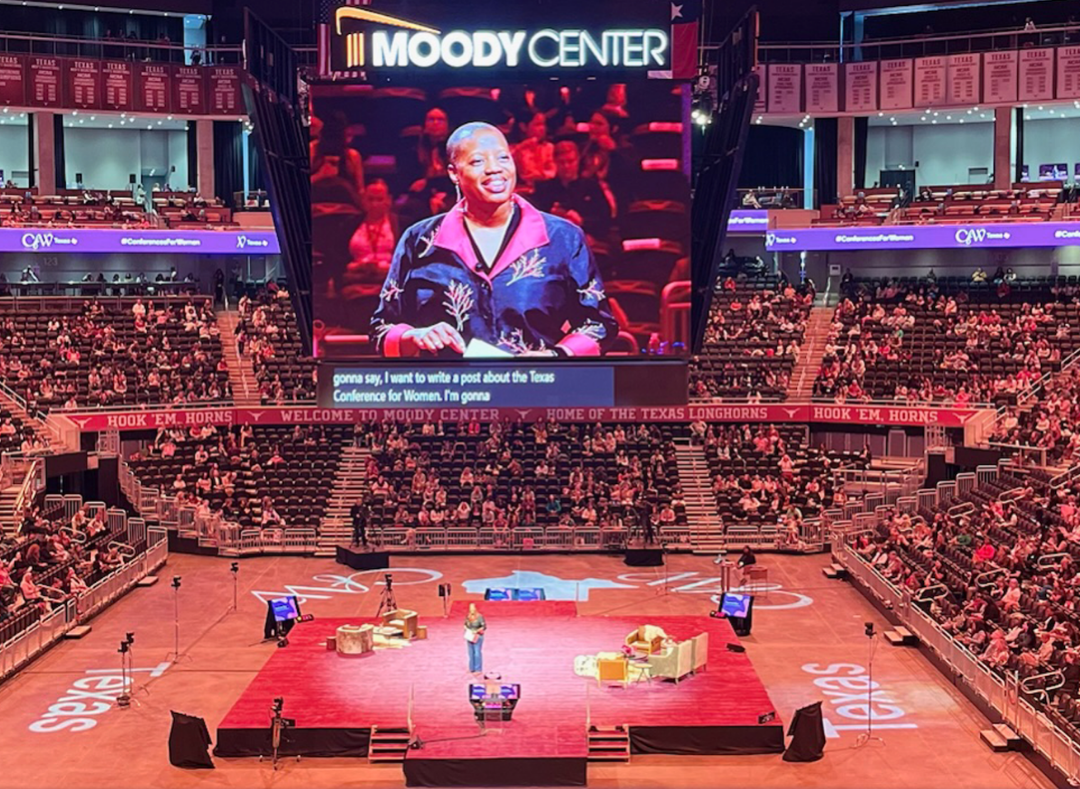
The second milestone was standing on stage in an arena at the Texas Conference for Women, speaking to 9,000 women. I will never forget the feeling of standing there, surrounded by that energy, realizing how far this journey had taken me.
Those two moments - one quiet and one enormous - reminded me that building something meaningful often starts small, but it can grow in ways you never imagined.
You’ve trained executives at major corporations. What’s a ‘corporate secret’ that solopreneurs can steal when crafting their own business pitches?
Two corporate “secrets” come to mind when I think about pitching.
The first is that you have to be talking to the right person. There’s a big difference between someone who wants to hire you and someone who actually can hire you. The person who likes your work but doesn’t have decision-making authority may need several conversations just to advocate for you internally. Whenever possible, you want to be in the room with the person who is making the decision so you can speak directly to the problem they need solved and move the conversation toward a close. It’s very difficult to win the work if the person in front of you can’t actually say yes.
The second is that people have to like you.
Corporations have endless options for vendors, consultants, and partners. There is always someone else pitching. That means expertise alone usually isn’t the deciding factor. You have to distinguish yourself as both knowledgeable and someone they genuinely want to work with.
When you pitch, you’re not just presenting the work. You’re presenting the relationship. They’re imagining what it will be like to collaborate with you, solve problems together, and spend time in conversation with you.
So the real pitch is a combination of two things: your capability and your presence.
Both matter.
What financial challenges have you faced, and how did you overcome them?
Launching a business after a long corporate career comes with financial adjustments.
When I started my company, I was coming from a finance career with a very different income structure. I knew the early years of entrepreneurship would require patience while the business grew, so I made the intentional decision to lean on credit for a period of time to help bridge that transition.
That was a big shift for me personally. I had always been someone who paid every card off and maintained a very high credit score. Suddenly I was thinking about cash flow in a completely different way.
What helped me navigate that period was being extremely intentional about managing money as it came in. When I received a large client payment, I focused on getting ahead of essential expenses; paying my mortgage forward, covering insurance, and making sure key obligations were handled months in advance. That approach helped me create breathing room so I could focus on building the business instead of constantly worrying about the next bill.
Even now, I’m still learning how to navigate the natural ebbs and flows of entrepreneurial income. But the experience has taught me an important lesson: managing cash flow strategically is just as important as generating revenue.
Entrepreneurship requires both vision and discipline, and sometimes the discipline is simply staying steady while the business grows into its next stage.
How do you want to be remembered in the world of business and entrepreneurship?
I hope to be remembered as someone who helped other people step into their own leadership.
For me, success has never been just about building a business. It is about building people. Throughout my career, I have been deeply committed to mentoring emerging professionals and helping them understand how opportunity actually moves through organizations. That includes how to build relationships, how to claim their voice, and how to navigate spaces that may not have been designed with them in mind.
That commitment also shows up in my nonprofit work. I care deeply about creating access for young people and early career professionals who might not otherwise have pathways into the opportunities available to them. When someone receives the right guidance, encouragement, and opportunity at the right moment, it can change the trajectory of an entire life.
The legacy I hope to leave is not just in what I accomplish myself. It is in the leaders who come after me. Many of the people I have mentored are now mentoring others, creating their own circles of growth and opportunity.
If my leadership style continues to show up in the next generation of leaders who believe in sharing knowledge, opening doors, and helping others rise, then I will consider that a legacy worth leaving.
What’s your best advice for women who are afraid to ask for the money they truly deserve?
The first step is getting clear on the math.
Start with the annual salary you would want to earn. Divide that by about 2,000 hours, which is roughly the number of working hours in a year. Then add about 30 percent to cover benefits, and another 30 to 40 percent to account for the kind of bonus or profit margin you would expect in a corporate role.
That number becomes your baseline hourly rate. And it should be the lowest number you are willing to accept.
But there’s another important reality to remember. When you leave a corporate role, you are no longer working a consistent forty-hour week that is fully billable. As a service provider, a significant portion of your time is spent on marketing, business development, administration, and creating your work. The hours you can actually charge for are often far fewer.
That means your rate has to be higher if you want to reach the annual income you’re aiming for.
From there, you push the number up. If no one ever questions your rate, it’s probably too low. You want to reach the point where some potential clients say the number is higher than they can accommodate. That tells you you’re actually testing the edges of the market.
The second piece is research. Look for pricing data online, talk to peers in your industry, and ask mentors, advisors, or coaches what they recommend. The goal is to understand what the market is actually paying for the type of work you do.
What I find most often is that the number women have in their heads is far lower than the number the market will bear.
So the real challenge is not just calculating your rate.
It’s having the confidence to say it out loud.
What’s the best advice you’ve ever received?
One of the best pieces of advice I ever received came from a mentor who told me to put myself in the room.
She told me that I’m charismatic and compelling in conversation, and that my presence in a live conversation would always be stronger than anything I could write in an email. Her advice was simple: go to the events, show up in person whenever possible, and give people the chance to experience the connection directly.
That advice changed how I approached building my business.
In-person conversations create a different level of trust and energy. When I meet people face to face, the connection is stronger and the likelihood that it turns into real work is much higher.
She was absolutely right. Some of the most meaningful opportunities in my career have started simply because I put myself in the room.
How do you spend most of your time?
Honestly, I spend a lot of my time working, and I love my work. I’m constantly creating workshops, developing new ideas for clients, writing content, and showing up at events where I get to meet fascinating people who are building bold things in the world. The work sits at this intersection of storytelling, leadership, and human potential, which means I rarely get bored.
At home, life has shifted a bit. My two older kids are off at college now, which means my daughter in high school finally has me to herself. So I spend a lot of time being a proud mom in the audience at choral concerts, fashion shows, and school plays, cheering her on and enjoying this chapter before she heads out into the world too.
Mentoring is also a big part of my life. I spend a lot of time talking with young professionals who are trying to figure out how careers actually work. Helping them navigate confidence, opportunity, and the early chapters of their professional lives is something I care deeply about.
Whenever I can, I travel. I love exploring new cultures and new places. It feeds my curiosity about how people live and think, and it’s something I’ve always tried to instill in my kids. I want them to know the world is wide and varied, and that if they stay curious and brave enough to step outside their comfort zones, they will eventually find the places that feel like home.
And when I’m not doing any of that, you’ll probably find me reading, listening to audiobooks, watching movies, or diving into music. I’m drawn to new stories and new worlds.
As you reflect on your journey, what are you most proud of and why?
It may sound cliché, but it really is hard to choose just one thing.
I am incredibly proud of the life I have built, because in many ways it should not have been possible. Poverty, mental illness in my family, neurodivergence, and emotional abuse could easily have dimmed my light. There were many moments in my life when the easier choice would have been smaller dreams, quieter ambitions, or simply surviving instead of thriving.
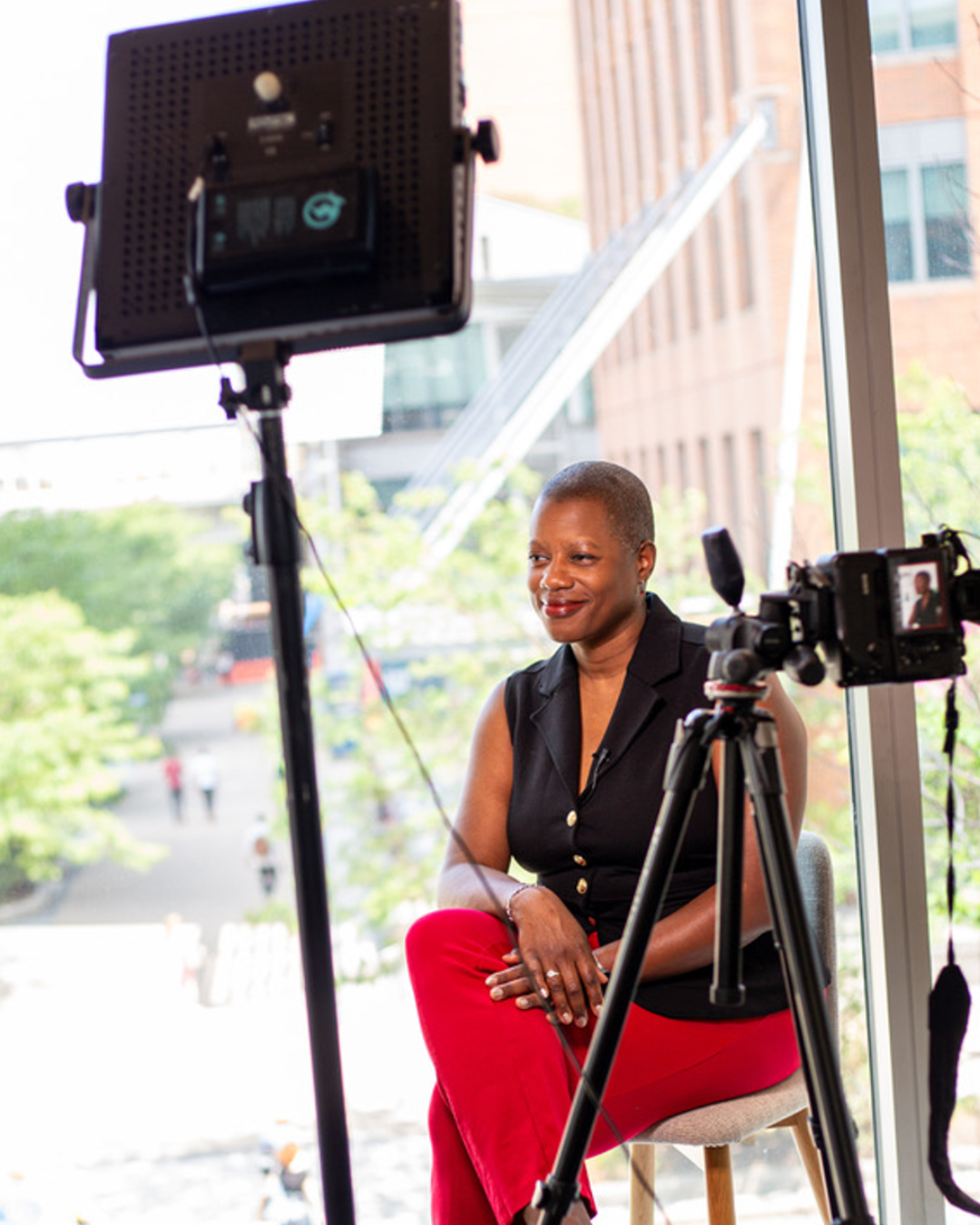
Getting to this place in my life is something I do not take lightly. Every once in a while I have to remind myself to pause, look back, and recognize how far I have come.
But if I am honest, the thing that fills me with the most pride is my children.
I became a single mom when they were two, four, and six years old. There were so many decisions to make and moments when I wondered if I was getting it right. I leaned on my mom, my closest friends, and a lot of research to help me create a childhood that was imaginative, supportive, and expansive. I wanted them to learn how to navigate challenges and manage stress, and to believe that the world was bigger than the circumstances they started in.
Now my older two are studying in the UK and Japan, and my daughter is already dreaming about Korea. Watching them build lives that stretch across the world is something I could never have imagined when they were small.
When I look at them, I see courage, curiosity, and possibility.
And that is my biggest point of pride.
Because their lives are proof that even when a story begins with obstacles, it can still grow into something extraordinary.
Tell us a little about your family and what you do for fun?
Family is a huge part of my life.
I’m one of six siblings, and a group of us have a long-standing tradition of what we call “flash-mob visits.” Someone has a birthday, a wedding, or a big celebration, and we’ll quietly fly in, take a quick nap, show up for the event, party until the sun comes up, and then catch a 7 a.m. flight back home. We’ve been doing it for years. We’re a close group, and we both support and challenge each other to keep becoming better versions of ourselves.
We also retired my mom a while ago, so these days she rotates between grandchildren in different parts of the country, occasionally returning home to check on her plants.
My kids are all artists in their own ways.
My oldest is studying animation and illustration in the UK and is currently applying to graduate programs in other countries. They’re exploring writing, media, and other creative paths to expand their artistic voice (and extend the college years a little longer).
My middle child is in his first year in Japan studying psychology and philosophy. He’s learning Japanese, building an international circle of friends, and experimenting creatively through modeling, painting, and voice acting.
My youngest is still in high school and already has big dreams. She’s a fashion designer, singer, and actress, and her current plan is to study fashion in Korea before deciding whether she wants to design for K-pop artists or work in costume design on Broadway.
Two years ago, I married my long-time partner, and we’re having fun navigating this stage of parenthood together while also dreaming about the international adventures we’ll take once our youngest launches into the world.
For fun, our house is full of music, movies, and nostalgia. We love old records, old films, old cartoons, and game nights. At this point we have seven record players scattered around the house and shelves of vinyl everywhere.
It’s a little chaotic, very creative, and full of stories.
One thing I’ve learned over the years is that our lives rarely follow the plan we imagined when we were younger. The turns, the detours, and even the difficult chapters are often the things that shape us the most.
My work today is about helping people recognize that they don’t have to shrink their story or wait for permission to step into their light. Sometimes the experiences that made us feel like outsiders are the ones that give us the perspective and resilience to lead, create, and build something meaningful.
I’m grateful for the journey that brought me here, and I’m excited to see where the next chapter leads.
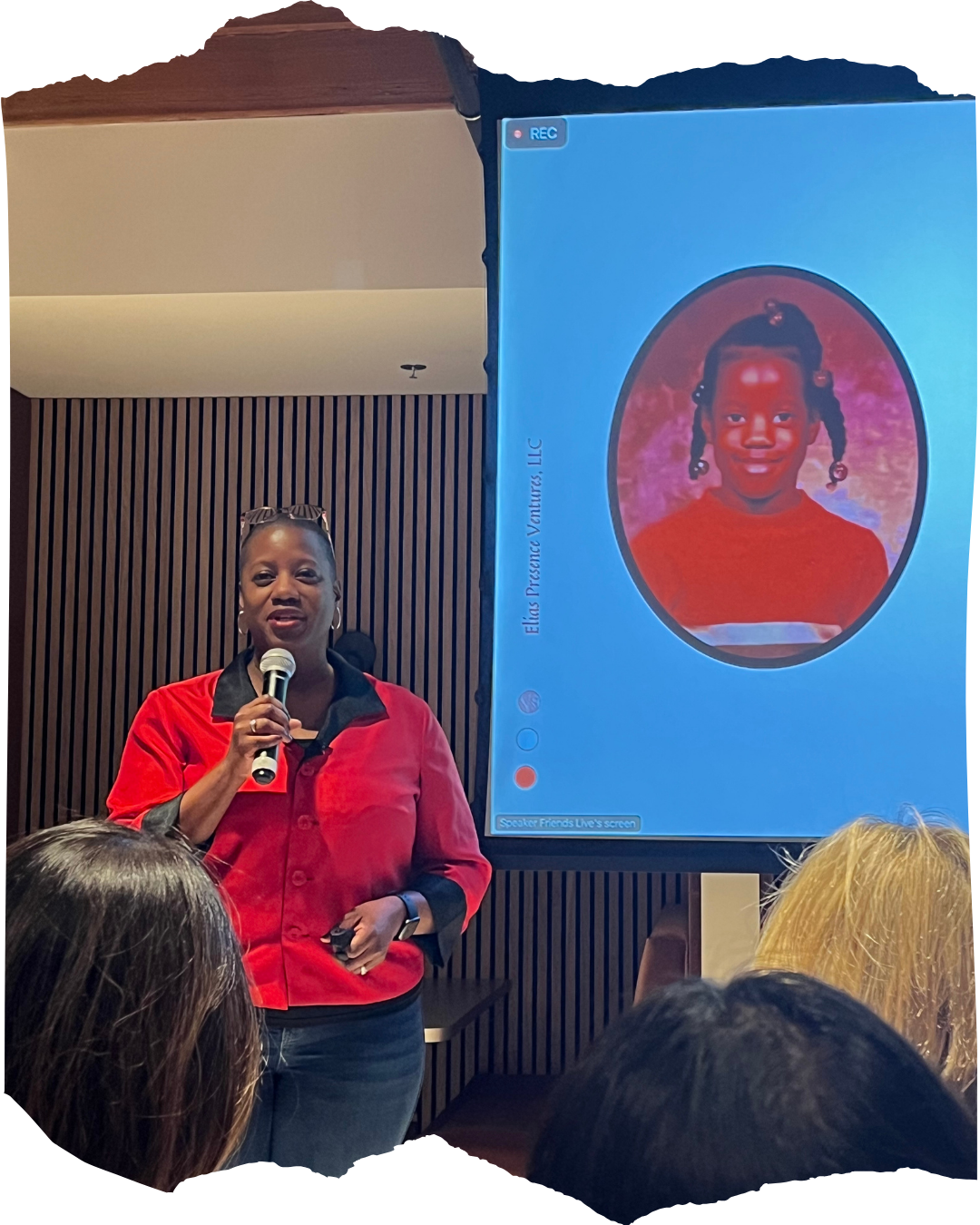
Photo Credit: Gabe Figueroa
To connect with Naeemah, visit:
http://www.linkedin.com/in/naeemahelias
https://www.facebook.com/luckey.mommey
