Possible Woman Interview with Sharon Ringier
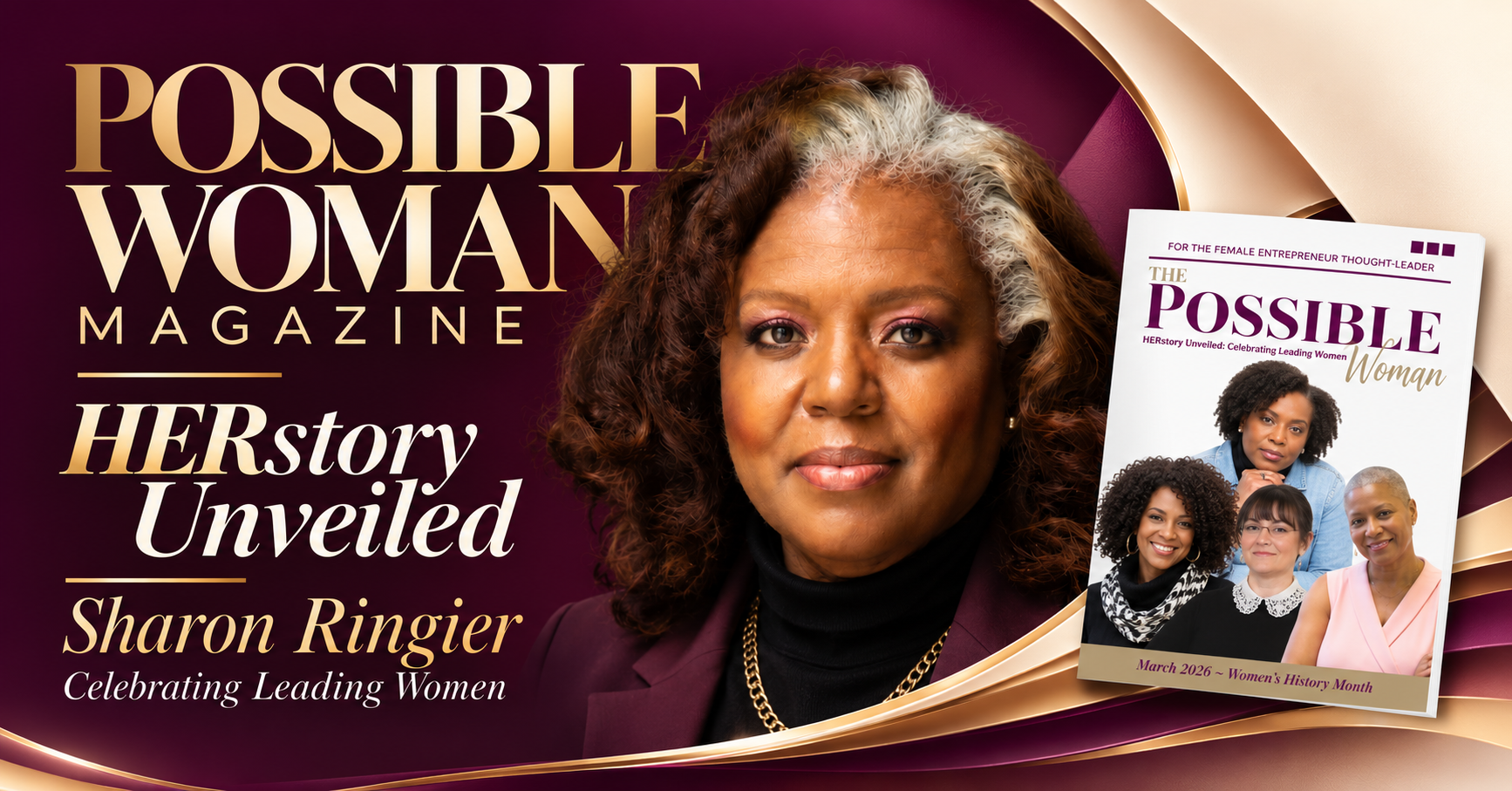
My journey didn't start with recognition. It started with a sense of something missing, a way of doing business that actually felt aligned with who I was and what I believed women in business deserved.
Everything I’ve built since then traces back to that feeling. A space where women can find each other, be heard, and stop pretending that going it alone is the only option. Now I sits right at the crossroads of purpose and real strategy, helping women take what they know about themselves and turn it into forward motion.
Sharon, please share your story...
I didn't set out to build a business. I set out to build something that actually mattered.
I'm Sharon Ringier, and if I'm being honest, my story isn't a straight line. It's full of turns I didn't see coming, moments I wasn't sure I'd get through, and decisions that scared me more than I let on. But it's mine, and I wouldn't trade a single part of it.
For years, I did what made sense on paper. I stayed in corporate, followed the path that was supposed to feel safe, and ignored the quiet voice telling me there was something else I was supposed to be doing. That voice got louder over time. Eventually, I had to listen.
Leaving stability behind wasn't some bold, cinematic moment. It was terrifying. But I kept coming back to one simple truth: if I wanted something different, I had to be willing to do something different. So I took the leap, and that choice reshaped everything.
When I founded I'm Possible Women's Empowerment Collaborative, I wasn't thinking about business models or brand strategy. I was thinking about every woman who had ever sat in a room full of people and still felt completely alone. I wanted to build something that fixed that. A real sisterhood, where collaboration meant more than competition, and where women could actually feel seen.
What started as an idea is now a living, breathing community. I've watched women walk into our spaces unsure of themselves and walk out with a clarity they didn't know they had. I've seen businesses launched, mindsets shifted, and lives genuinely changed. That never gets old.
I won't pretend the road has been smooth. There have been seasons where I questioned everything, including myself. But I've learned that reinvention isn't a setback. It's how you grow. Every hard pivot, every moment of doubt, every time I had to start over taught me something I couldn't have learned any other way.
The Possible Woman Collective grew out of that understanding. Women don't just need a place to network. They need a place to breathe, to be honest, to dream out loud without apology, and to build something that outlasts them. That's what we created. Not just a business community, but a space with real legacy behind it.
Today, whether it's through Possible Woman Magazine, our events, or the programs we've built together, my mission stays the same. I want every woman who crosses paths with this community to leave knowing she is not alone, her dreams are not too big, and she has everything she needs to make them real.
So if you're reading this wondering whether you have what it takes, I'm telling you right now that you do. The path won't always be easy. But you were made for it.
You are possible.
How has your journey evolved from where you started to where you are now?
Honestly, I started out as an event planner. Weddings, corporate events, social gatherings. I loved it and genuinely thought that was my lane for the long haul. I was good at it, I was building something, and there was real joy in watching an idea come to life in a room full of people.
But somewhere along the way, I noticed something. The event itself wasn't what stayed with people. It was the conversation they had in the corner with someone they'd just met. It was the moment something clicked for them, the connection they didn't know they needed. That's what they carried home. And once I saw that, I couldn't unsee it.
So the work started to shift. Not because I abandoned what I built, but because I finally understood what I was actually building toward. It stopped being about the event and started being about the experience, the community, and what happens to people long after they leave the room.
That clarity is what eventually grew into what exists today. A magazine, a collective, a podcast, a digital channel, all of it built around one intention: to give women a real place to be seen, to grow, and to find the people and resources that help them get where they're going.
My journey hasn't been about starting from scratch. It's been about peeling back the layers until I could see what was there the whole time, and then fully committing to it.
If you could go back to the beginning, what advice would you give yourself?
Trust your voice earlier. That's the big one.
I spent so much time waiting until I felt ready, waiting until I had more experience, more proof, more of something that would finally make me feel qualified to take up space. But that moment never just arrives on its own. Clarity doesn't come from thinking harder. It comes from moving.
I would also tell myself to stop chasing what looks good from the outside. There were opportunities I said yes to because they seemed like the right move, the smart move, the move that made sense to other people. And some of them cost me time, energy, and focus I couldn't afford to lose. Alignment isn't a soft concept. It's actually one of the most strategic things you can build your decisions around. Not every open door is your door.
And the last thing I'd say is this: you are allowed to outgrow things. The version of success you pictured at the beginning doesn't have to be the version you're still chasing five years in. Changing direction isn't failure. It means you were honest enough with yourself to pay attention and brave enough to act on what you saw.
Growth asks you to evolve. The sooner you stop treating that as a threat and start treating it as part of the process, the lighter everything gets.
How do you empower and uplift others through your leadership?
For me, it starts with making sure the spaces I create are real. Not just motivating on the surface, but actually useful, actually honest, and built in a way where women feel like they genuinely belong there.
A lot of what I do is help women get clear. Clear on who they are, what they're actually after, and how they want to show up in their work and their lives. Once that foundation is there, my job becomes connecting them to the platforms, the people, and the opportunities that match where they're headed.
That's what the community, the magazine, the podcast, and the events are all designed to do. Make visibility accessible. Make collaboration feel natural. Put women in rooms where their voice carries weight and where someone in the corner might change the direction of their business or their life.
But I think the most important thing I do is show up honestly. I don't hide the hard parts of the journey or pretend the path looked cleaner than it did. When I share my own evolution openly, it gives other women permission to do the same. To be somewhere in the middle and still show up fully. To not have it all figured out and still take the next step.
Leadership, to me, has never been about standing at the front. It's about making sure no one has to figure it out alone.
How has resilience played a role in your journey?
Resilience has been less of a choice and more of a requirement. There were moments in this journey where things fell apart in ways I didn't see coming, where the plan I had stopped working and I had to figure out the next move without a clear picture of what that looked like. Those moments tested everything.
But what I learned is that resilience isn't just about gritting your teeth and pushing through. That's part of it, but it's not the whole thing. The deeper part is staying honest with yourself. Noticing when something has stopped working, having the courage to admit it, and then making the call to shift without letting that feel like defeat.
Every hard season taught me something I couldn't have learned in a smooth one. The pivots, the rebuilds, the times I had to let go of something I thought was permanent, all of it sharpened how I lead, how I build, and how I make decisions now. I don't think I would trust my instincts the way I do today without having had them tested first.
What I know for certain is that resilience and growth aren't separate things. You don't get one without the other. Every time I found a way through something difficult, it opened up something new, a clearer direction, a stronger foundation, a deeper understanding of what I was actually building and why.
The path hasn't always been visible. But resilience is what kept me moving anyway.
What advice do you have for others on turning setbacks into opportunities?
Setbacks are going to happen. That part isn't negotiable. But what you do with them, how you read them and respond to them, that's where everything changes.
The first shift is in how you frame it. When something falls apart, the natural instinct is to ask why it's happening to you. But that question keeps you stuck. The better question is what is this showing me. That one small change in how you look at it creates room to actually move forward instead of spinning in frustration.
Every setback I've experienced has carried information. Sometimes it revealed that something was never as aligned as I thought. Sometimes it showed me a gap I needed to close or a direction I had been avoiding. None of that is comfortable to sit with, but if you're willing to be honest with yourself, it becomes useful.
The other thing I want to say is don't go through it alone. There is a version of resilience that looks like isolating yourself and powering through in silence, and it costs more than it gives. Find your people. Get into spaces that remind you of who you are when everything feels shaky. That kind of support doesn't just feel good, it actually helps you think more clearly and recover faster.
Use the setback as data. Figure out what needs to shift. Then keep going with more intention than you had before. That's not just how you survive hard moments. That's how you come out of them better than you went in.
What daily or weekly habits help you stay focused and energized?
Consistency is what keeps me going, not some perfect morning routine or a productivity system I found in a book. Just showing up for myself in small, reliable ways every single day.
Mornings are sacred to me. I start with devotionals because that's what grounds me before anything else gets a chance to pull my attention. From there I move into meditation, just enough time to get quiet, clear my head, and actually hear myself think. And then I walk. That walk does something for me that nothing else does. It's where I process, where ideas show up, and where I transition from being still to being ready. By the time I sit down to work, I've already taken care of myself first.
That rhythm isn't about being rigid. It's about setting the tone instead of just reacting to whatever comes at me first.
On a weekly basis, I check in with myself about alignment, not just activity. It's easy to stay busy. The harder thing is staying honest about whether what you're doing is actually moving anything forward. So I ask myself what worked, what drained me, and what needs to shift. That habit alone has saved me from a lot of wasted energy.
I also take creativity and connection seriously as part of how I refuel. Conversations with other women, time spent inside the community I've built, or simply stepping away long enough to breathe and reset. None of that is extra. All of it feeds the work.
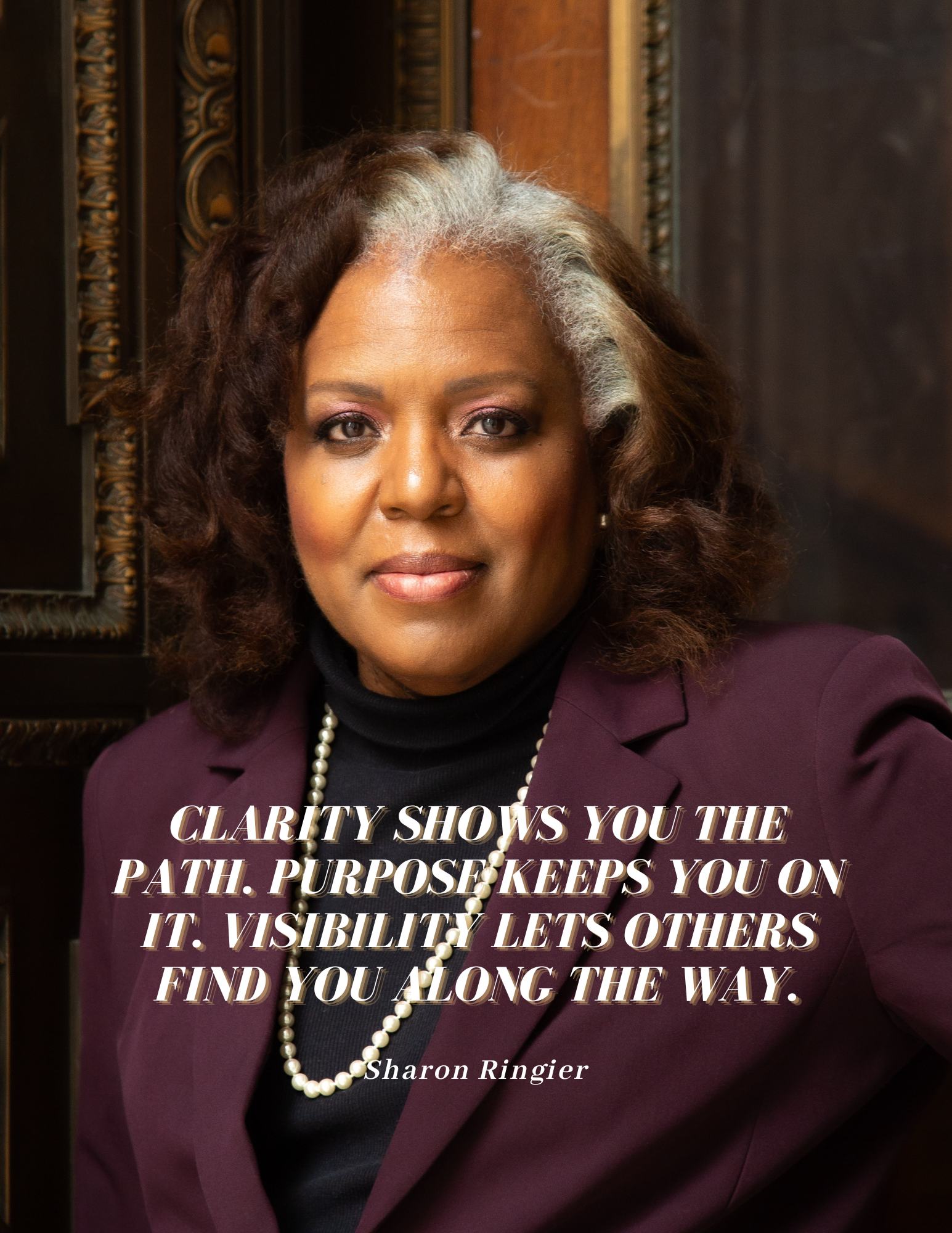
And when everything else feels noisy or overwhelming, I come back to my why. Not in a motivational-poster kind of way, but genuinely. When I'm clear on the reason behind what I'm building, it gets a lot easier to filter out the noise and stay grounded in what actually matters.
What mindset shifts helped you break through limitations or stereotypes?
The biggest shift for me was realizing I had been trying to fit into a shape that was never made for me.
Early on I thought there was a right way to build something credible. A linear path, a narrow definition of what my work should look like, a version of success that other people would immediately recognize and respect. I spent real time and energy trying to fit that mold before I finally understood that my strength was never going to come from mirroring what already existed. It was going to come from how I built, what I valued, and what I was willing to do differently.
The second shift was stopping the search for permission. I used to wait for some kind of outside validation before I felt like I could expand or pivot or try something that didn't fit neatly into what I'd already established. At some point I had to get honest with myself about the fact that most of the limitations I was bumping up against weren't coming from the outside. They were coming from me. Once I stopped waiting for someone else to greenlight my direction, everything opened up.
The third one was letting go of the idea that more automatically means better. More projects, more output, more visibility. That thinking kept me busy in ways that weren't always meaningful. Shifting my focus to alignment and actual impact over volume changed how I lead, how I make decisions, and honestly how I feel about the work day to day.
At the bottom of all of it was a simple but hard-earned perspective change. I stopped seeing myself as someone trying to find a way in and started seeing myself as someone building something that didn't exist yet. That one shift changed just about everything.
What’s one milestone you never imagined reaching but did?
One milestone I never imagined was creating a platform that would elevate the voices of other female entrepreneurs by featuring them through NYTS. What started as a personal opportunity has grown into something much bigger and more intentional in my work today.
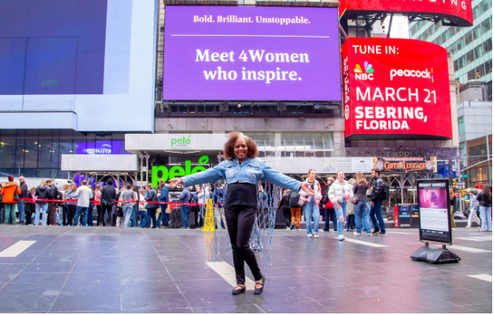
NYTS is one of the largest platforms for creating authority and visibility, and being connected to it opened my eyes to the power of what strategic exposure can do for women in business. Over time, I began to shift my focus from individual recognition to intentionally using that same opportunity to spotlight other trailblazing female entrepreneurs.
Today, I create this experience as a way to amplify their voices, elevate their credibility, and position them in spaces where their work can be seen at a higher level. It has become more than a feature or moment of recognition. It is a platform I use to help women step into greater visibility and expanded influence in their industries.
What began as something I never expected has now become one of the most powerful ways I serve and support women on their entrepreneurial journey.
When I first started my journey in event planning, I could not have imagined building experiences like this. My focus was on creating meaningful moments and bringing people together. As my work evolved, so did my vision. I began to see that the real impact was not just in the experience itself, but in how it could be used to open doors for others.
How do you approach risk-taking when it comes to financial growth?
I don't approach financial risk impulsively, but I also don't let fear make my decisions for me. The honest truth is that both of those extremes have a cost, and I've had to learn how to sit in the middle with intention.
Before I move on anything financial, I ask myself three things. Is this clear on purpose? Does the return go beyond just revenue, meaning does it expand what I'm building or position women in this community at a higher level? And does this investment open capacity or quietly close it? If something stretches me but feels aligned, I'm willing to move. If it only creates pressure without a real point, I step back.
One of the more uncomfortable lessons I've learned is that playing it too safe carries its own kind of risk. Some of the most meaningful growth in my business came from investing in visibility, in community experiences, in platforms that most people would have told me to wait on. Those weren't reckless bets. They were calculated ones rooted in a clear vision of where I was headed.
I think about financial growth as a combination of discernment and courage. You need both. Courage without discernment is just noise. Discernment without courage keeps you exactly where you are. The goal is to move with enough information to make a smart decision and enough boldness to actually make it.
Risk isn't something I avoid. It's something I size up carefully and then meet on my own terms.
If you could go back and give your younger self one piece of entrepreneurial wisdom, what would it be?
If I could go back and give my younger self one piece of entrepreneurial wisdom, it would be to trust timing and alignment more than urgency and pressure.
I spent a lot of time in the early stages of my journey thinking I had to move faster, do more, and prove myself in order to be successful. What I’ve learned over time is that real growth is not rushed, it is built through clarity, consistency, and alignment with the right opportunities, not all opportunities.
I would tell myself that it is okay to evolve. What you start with does not have to be what you stay with. Some of the most powerful shifts in my journey came from allowing myself to outgrow old versions of my business without guilt.
Most importantly, I would remind myself that you do not need to force visibility or success. When you stay committed to your purpose and continue showing up with intention, the right doors open in ways you could not have planned for.
What’s one non-traditional strategy that helped you build your brand and business that more women should be using?
Forget traditional marketing for a second. The strategy that has moved the needle more than anything else for me is building visibility through experience rather than promotion.
What that means in practice is that instead of just talking about what I do, I create intentional spaces where women can actually be seen, celebrated, and positioned in a way that reflects the level they're operating at. Curated experiences, strategic features, opportunities like NYTS that don't just put someone in front of an audience but actually build their authority and credibility in a room that matters.
The difference is context. Promotion gets you attention. Experience builds understanding. When someone witnesses what a woman brings to the table inside a space that was designed to reflect her excellence, they don't just see her, they get her. That's a completely different kind of visibility, and it sticks.
What I've watched happen consistently is that when women are placed in environments that genuinely match their level, something shifts. Their confidence changes. The way they carry themselves in conversations changes. The opportunities that start finding them change. The brand starts to hold a different kind of weight in the market.
Most women are focused on growing their presence. And presence matters. But authority is built in experiences, in the rooms you're in, in how you're positioned when you walk through the door, and in the company you're seen alongside. That's the strategy more women need to be building around. Not just being seen, but being seen in the right context.
What legacy do you want to leave behind?
When I think about legacy, I think about Kaiyah.
She is my granddaughter and honestly one of the clearest reasons I do what I do. Every space I build, every woman I help elevate, every door I push open, part of that is for her. I want her to grow up in a world where what's possible for women isn't just a conversation. I want it to be something she can see, touch, and walk right into.
I want her to watch women build businesses without apology, own their voices without shrinking, and step into rooms they were never supposed to have access to. And I want her to look at all of that and think, of course. Because that's just what women in her family do.
More than any accolade or milestone, that's what I'm building toward. A legacy of visibility, of expansion, of women being genuinely seen and supported for what they're creating in the world. Not celebrated as an exception, but recognized as the standard.
The work has always been bigger than me. It's about what gets left behind when I'm no longer the one in the room. The foundation that makes it easier for the women who come after to dream without a ceiling, to build without having to fight for basic belief, and to lead without having to constantly prove they belong.
That's the legacy. Not what I accomplish, but what she inherits.
I want Kaiyah to look back one day and know she comes from a line of women who built boldly, led with intention, and never once closed a door behind them.
What’s one non-traditional strategy that helped you build your brand and business that more women should be using?
Most of my time lives somewhere between building and connecting, and honestly I wouldn't have it any other way.
A big part of my days goes into the platforms and spaces I've created. The magazine, the community, the content, the experiences. There's always something being developed, refined, or brought to life, and I'm genuinely hands on with most of it because it matters to me that what we put out actually reflects the vision behind it.
But some of the most important time I spend is in conversation. Sitting with women, hearing where they are, what they're carrying, what they're reaching for. That's where the real work happens. Not on a stage or in a strategy session, but in those honest moments where someone finally says the thing they've been holding and you get to help them see it differently.
I'm also intentional about protecting time to think. Building something at this level requires clarity, and clarity doesn't come from constant motion. So I make space to step back, check in with myself, and make sure what I'm creating still lines up with where I'm actually trying to go.
And then there's family. My grandbabies have a way of pulling me completely out of work mode in the best possible way. That time isn't separate from the mission. It's the heartbeat of it. It reminds me why all of this matters and brings everything back to what's real.
That balance, building, connecting, reflecting, and being fully present with the people I love, that's where I live most of my time. And I protect all of it.
Photo Credit: BluePanther Studios
To connect with Sharon, visit:
https://www.linkedin.com/sharonringier


